
Few utility aircraft have shaped a region the way the de Havilland Canada DHC-2 Beaver shaped the Canadian north, and the reason is straightforward: de Havilland Canada canvassed around 80 working bush pilots before it drew the aircraft.
What came back was a 450hp radial up front, cargo doors wide enough to swallow fuel drums, and short field performance good enough to work off gravel bars, lakes and snow.
Roughly 1,657 were built between 1947 and 1967, several hundred remain airworthy, and main gear and tail wheel tires for the type are still supported by current production lines.
de Havilland Canada DHC-2 Beaver Specifications
| Manufacturer | de Havilland Aircraft of Canada, Downsview, Toronto. Type certificate now held by De Havilland Canada (acquired by Viking Air in 2006) |
| Type | Single-engine STOL utility aircraft |
| First flight | 16 August 1947 (prototype CF-FHB) |
| Certification | Canadian type approval 1948; US and export approvals followed |
| Production status | Out of production. Manufacture ended February 1967 |
| Units built | 1,657, of which 60 were completed as Mk.III Turbo Beavers |
| Engine | 1x Pratt & Whitney R-985 Wasp Junior nine-cylinder radial, 450hp (Mk.I) |
| Max range | Approximately 455nm (843km), land plane on standard tanks |
| Cruise speed | 124 KTAS (143 mph / 230 km/h) |
| Max speed | 137 KTAS (158 mph / 255 km/h) |
| Service ceiling | 18,000ft |
| Rate of climb | Approximately 1,020 ft/min at sea level |
| Takeoff distance | Approximately 1,250ft over a 50ft obstacle at MTOW, wheels, sea level ISA |
| Landing distance | Approximately 1,250ft over a 50ft obstacle at typical landing weight |
| Max takeoff weight (MTOW) | 5,100 lb (2,313 kg) land plane. Higher weights apply under float and gross weight STCs |
| Passenger capacity | Up to 7 passengers (Mk.I). Up to 10 in the Mk.III Turbo Beaver |
| Crew | 1 pilot |
| Price | Out of production. Piston airframes currently list from roughly $325,000 to $1.2 million; turbine conversions from $1.1 million to $1.6 million |
| Operating cost | Approximately $650 to $900 per hour variable, depending on fuel price, utilization and engine reserve |
de Havilland Canada DHC-2 Beaver – History and Overview
Development and Background
With wartime contracts winding down, de Havilland Canada needed a civil product of its own and went looking for the specification rather than inventing one. The design team sent questionnaires to around 80 bush operators and acted on what came back: full size doors on both sides sized for 45 imperial gallon drums, all metal construction instead of fabric, and enough power to get off a short lake fully loaded. Chief engineer Fred Buller and his team initially planned the aircraft around a de Havilland Gipsy Queen, then switched to the Pratt & Whitney R-985 Wasp Junior, which was plentiful and cheap on the post-war surplus market.
Prototype CF-FHB flew from Downsview on 16 August 1947. Civil sales started slowly at around three aircraft a month, with the Ontario Department of Lands and Forests among the early volume buyers. The program was secured in 1951 when the US Army selected the Beaver after a competitive fly-off, placing orders that eventually ran to roughly 970 aircraft designated L-20 and later U-6A.
Design and Performance
The Beaver is a high wing all metal monoplane built around load carrying rather than speed. Its entire wing trailing edge is hinged, with hydraulically operated flaps and slotted ailerons that droop with the flaps to extend the high lift system across the full span. That arrangement, combined with low wing loading and a large three-blade propeller, is what produces the short field numbers operators buy the type for.
Fuel lives in three belly tanks, which keeps the centre of gravity stable as fuel burns off and leaves the cabin clear. The cabin itself takes seven passengers or a freight load accessed through doors on both sides, and the airframe is certified on wheels, skis, straight floats and amphibious floats. Pilots describe the controls as heavy and deliberate, with stall behaviour that stays honest at the low speeds the aircraft is usually flown at.
Modification is the norm rather than the exception. Common additions include Baron STOL and wing angle kits, wingtip tanks, Alaskan cargo doors, bubble windows, Sealand cabin extensions and three-blade propeller conversions, and many airframes carry several at once.
Variants
- Beaver Mk.I: the baseline R-985 powered production aircraft and the overwhelming majority of the 1,657 built.
- L-20A / U-6A: the US Army and USAF version, 968 built, redesignated U-6A in 1962.
- L-20B / U-6B: six aircraft with minor equipment changes, redesignated U-6B in 1962.
- Beaver AL Mk.1: 46 aircraft supplied to the British Army for liaison and light transport work.
- Beaver Mk.II: a single aircraft fitted with an Alvis Leonides radial. It did not enter production.
- Turbo Beaver Mk.III: 60 built from 1963 with a Pratt & Whitney Canada PT6A-6 or PT6A-20 turboprop, lengthened fuselage, squared-off fin and seating for up to 10.
- Aftermarket turbine conversions: the Viking DHC-2T with a PT6A-34, the Wipaire Boss Turbo-Beaver and the Airtech Canada DHC-2/PZL-3S are the most common. Conversions account for a significant share of the high-value end of the market.
- eBeaver: Harbour Air’s electric conversion using a magniX propulsion unit, first flown in December 2019 and still in certification.
Operators
Beavers were delivered to more than 60 countries, and military users included the US Army and Air Force, the British Army, the RAAF, the RNZAF and the Canadian forces. A New Zealand Beaver supported Sir Edmund Hillary’s 1958 Commonwealth Trans-Antarctic Expedition, and Ontario’s natural resources department operated 40 at one point.
Civil use is concentrated in the Pacific Northwest, British Columbia and Alaska, where floatplane charter and lodge work keeps the fleet busy. Harbour Air operates the largest seaplane fleet of the type, and Kenmore Air has built a parallel business rebuilding and modifying airframes. Private owners, survey operators and government agencies make up the rest.
Current Status
Production ended in February 1967 and will not restart. Several hundred airframes are still flying, and support is better than the age of the type suggests: Viking Air acquired the original jigs and drawings in 1983 and the type certificates in 2006, and the business now trades as De Havilland Canada following consolidation under Longview Aviation Capital.
The used market is thin but active, with piston airframes advertised from roughly $325,000 for high-time examples to over $1.1 million for low-time aircraft on amphibious floats with STOL kits. Turbine conversions list between $1.1 million and $1.6 million. Consumables including main gear and tail wheel tires come from current production sizes rather than obsolete part numbers, so tire availability is not a constraint on keeping one flying.
DHC-2 Beaver Landing Gear and Tires
Landing Gear Configuration
The Beaver uses a fixed conventional (tailwheel) undercarriage with a single wheel on each main gear leg and a steerable tail wheel. The tail wheel steers through the rudder pedals to around 25 degrees either side of the centreline, then disengages and castors freely beyond that, which is what makes tight float dock and ramp manoeuvring workable. Main gear legs carry oleo shock struts and hydraulic brakes, and the wheel units are removed in their entirety when the aircraft goes onto floats or skis.
Many airframes operate on oversize low pressure tundra tyres fitted under supplemental type certificate, which changes wheel, brake and clearance requirements and takes the fitment outside the standard size below. Operators running Alaskan Bushwheel or similar conversions should work from the STC paperwork and the aircraft equipment list rather than the baseline figures.
DHC-2 Beaver Tire Specifications
| Main gear tire size | 8.50-10 |
| Main gear ply rating | 8PR |
| Tail wheel tire size | 5.50-4 |
| Tail wheel ply rating | 8PR (typical) |
| Construction | Tube type standard. Tubeless 8.50-10 options exist and are fitted with a tube on tube-type wheels |
| Tire pressure | Published in the Aircraft Maintenance Manual. Verify against the AMM for the airframe and gear configuration |
| Compatible brands (main gear) | Goodyear, Michelin, Condor, Dunlop |
| DMI part numbers (main gear) | 850C86-2, 850T86-2, 025-349-0, 072-376-0, DR8628, DR8632T |
Verify all tire specifications against the aircraft’s Aircraft Maintenance Manual and any applicable airworthiness directives before ordering. Serial number, gear configuration and STC history affect tire and wheel requirements on this type.
Main Gear Tires
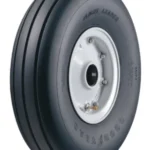
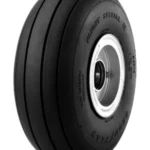
The Beaver runs an 8.50-10 main gear tire at an 8 ply rating, the same size used by the Cessna 208 Caravan and several agricultural types, which keeps it in current volume production. Goodyear lists the DHC-2 Beaver directly in the application data for its 8.50-10 8PR Flight Custom III, and equivalent 8.50-10 8PR tires are produced by Michelin, Condor and Dunlop. Load demand relative to the aircraft’s 5,100 lb MTOW is modest for the size, so wear rather than load capacity usually drives replacement.
Operating environment matters more than cycle count on this type. Gravel strips, beach landings and long taxi runs on rough surfaces cut tread life sharply compared with paved operations, and amphibious aircraft add salt water exposure to the equation. Float-equipped aircraft that fly most of the season on straight floats will see tires age out on calendar time and rubber condition rather than wear.
Tail Wheel Tire
Tail wheel fitment on the Beaver is a 5.50-4, usually at an 8 ply rating, and it is a size shared with a handful of other heavy tailwheel types. It runs at a higher inflation pressure than the mains and takes a disproportionate share of abuse during pivot turns and ramp handling, so sidewall scuffing and tread slippage on the rim are the usual findings at inspection. Check the tail wheel tire for cuts, bruising and slippage at each preflight, as the flight manual calls for.
Approved and Compatible Brands
Main gear tires in 8.50-10 8PR listed in the DMI Aviation catalog:
- Goodyear Flight Custom III: 850C86-2, 8.50-10, 8PR, 160 mph, tube type, main gear. Goodyear lists the DHC-2 as an approved application for this part number.
- Goodyear Flight Custom III: 850T86-2, 8.50-10, 8PR, 160 mph, tubeless, main gear. Also listed against the DHC-2 Beaver in Goodyear application data.
- Michelin Air: 025-349-0, 8.50-10, 8PR, 160 mph, main gear.
- Condor: 072-376-0, 8.50-10, 8PR, 120 mph, main gear.
- Dunlop: DR8628, 8.50-10, 8PR, 160 mph, main gear.
- Dunlop: DR8632T, 8.50-10, 8PR, 120 mph, main gear.
Tubes for the 8.50-10 main gear fitment:
- Michelin Airstop: 092-348-0, 8.50-10.
- Goodyear Flight Mate: 302-120-402 TR-25 straight stem, 7.50/8.50-10.
The Michelin, Condor and Dunlop items are same size and same ply rating alternatives to the Goodyear fitment rather than fitments listed by the airframe manufacturer, so confirm approval against the AMM and the aircraft equipment list before ordering. The 5.50-4 tail wheel tire is not currently carried in the DMI Aviation catalog.
Frequently Asked Questions – de Havilland Canada DHC-2 Beaver
Is the DHC-2 Beaver still in production?
No. De Havilland Canada built the last Beaver in February 1967 after 1,657 aircraft. The type certificate is held by De Havilland Canada, which acquired it as Viking Air in 2006 and has manufactured spare parts from the original jigs and drawings since 1983. Several hundred airframes remain airworthy and tires, tubes and consumables come from current production sizes.
What are the DHC-2 Beaver specifications?
The Mk.I is powered by a 450hp Pratt & Whitney R-985 Wasp Junior radial, cruises at around 124 KTAS, tops out near 137 KTAS and has a service ceiling of 18,000ft. Maximum takeoff weight is 5,100 lb on wheels and the cabin seats a pilot and up to seven passengers. Full figures are in the specifications table above.
What is the range of the DHC-2 Beaver?
Approximately 455nm (843km) for a land plane on standard tanks. Float installations, wingtip tanks and cruise power setting all move that figure significantly, and operators planning long legs should work from the actual aircraft flight manual rather than a generic figure.
What is the DHC-2 Beaver price?
There is no new list price, as production ended in 1967. Piston Beavers are currently advertised from around $325,000 for high-time airframes to over $1.1 million for low-time examples on amphibious floats with STOL modifications. Turbine conversions including the Viking DHC-2T and Wipaire Boss Turbo-Beaver list between $1.1 million and $1.6 million.
What does the DHC-2 Beaver cost to operate per hour?
Variable operating cost for a piston Beaver runs roughly $650 to $900 per hour, covering fuel, oil, routine maintenance and engine reserve. R-985 overhaul reserve is the single largest line and the figure moves with avgas price, annual utilization and whether the aircraft operates on floats. Turbine conversions shift the balance toward higher fuel burn and lower engine reserve.
Where can I find a DHC-2 Beaver for sale?
Listings appear on Controller, Trade-A-Plane, GlobalAir and specialist brokers in British Columbia and Alaska, where most of the active fleet is based. Inventory is thin, typically a handful of aircraft worldwide at any one time, and listings often sit on the market for six months or more.
What is the DHC-2 Beaver landing distance?
Around 1,250ft over a 50ft obstacle at typical landing weight on wheels, sea level and ISA conditions. Ground roll is considerably shorter. Actual figures depend on surface, weight, wind and whether the aircraft carries STOL modifications.
What tire size does the DHC-2 Beaver use?
Main gear tires are 8.50-10 at an 8 ply rating and the tail wheel is a 5.50-4, typically at an 8 ply rating. Aircraft operating on tundra tires under STC use a different fitment entirely. Verify against the AMM for the specific serial number and gear configuration before ordering.
Which tire brands are approved for the DHC-2 Beaver?
Goodyear lists the DHC-2 Beaver in the application data for its 8.50-10 8PR Flight Custom III, which makes it the primary approved fitment. Michelin, Condor and Dunlop all produce 8.50-10 8PR tires in the same specification. Confirm approval for the specific airframe against the AMM and equipment list.
How much do DHC-2 Beaver tires cost?
Pricing for 8.50-10 8PR main gear tires varies by brand, construction and speed rating. See the individual product listings for current pricing, or request a quote for a set with tubes.
What is the tire pressure for the DHC-2 Beaver?
Inflation pressures for the main gear and tail wheel are published in the Aircraft Maintenance Manual and vary with gear configuration and tire fitment. Set pressure to the AMM figure for the aircraft and check it cold. Tundra tire installations run far lower pressures under their own STC data.
How long do DHC-2 Beaver tires last?
Tire life on this type is driven by operating surface rather than a fixed cycle limit. Aircraft working gravel, beaches and unimproved strips wear main gear tires markedly faster than those on paved surfaces, and float-equipped aircraft often retire tires on age and rubber condition before tread depth becomes the limit. Follow the operator maintenance program and AMM limits.
How often should DHC-2 Beaver tires be changed?
Replace when tread reaches the wear limit in the AMM, when cord or fabric is exposed, or when cuts, bulges, flat spots or sidewall damage are found at inspection. Tail wheel tires should also be checked for slippage on the rim. A licensed engineer should make the final call against the AMM and the aircraft maintenance program.