
Russia’s attempt to build an airliner without Western content runs through Kazan, where the Tupolev Tu-214 has been assembled in small numbers since 1996.
The type is the heavyweight member of the Tu-204 family, trading structural weight for fuel capacity to reach 110,750kg at takeoff, and it is the airframe behind almost every Russian government command post, relay and surveillance aircraft flying today.
Gear and tire fitments follow the PS-90A powered side of the family rather than the Rolls-Royce variants, which is the detail that matters when sourcing.
Tupolev Tu-214 Specifications
| Manufacturer | Tupolev. Assembled by the S.P. Gorbunov Kazan Aviation Plant (KAZ), formerly the Kazan Aircraft Production Association, now a branch of PJSC Tupolev |
| Type | Medium-range narrow-body airliner |
| First flight | 21 March 1996 |
| Certification | Type certificate ST198-Tu-214 issued by the Interstate Aviation Committee on 29 December 2000 at 110,750kg. Approval of major change for the import-substituted standard, 27 December 2025 |
| Production status | In production at Kazan at low rate |
| Units built | Roughly 30 to 40 Tu-214 airframes, within a Tu-204 family total of approximately 89 |
| Engines | 2x Aviadvigatel PS-90A turbofan, 157 kN (35,300 lbf) each |
| Max range | 6,500km (3,510nm) with passengers and baggage. 4,100km with maximum commercial payload |
| Cruise speed | 850 km/h. Maximum 900 km/h |
| Max operating altitude | 12,100m (39,700ft) |
| Takeoff distance | 2,280m required runway length |
| Landing distance | 2,250m required runway length |
| Max takeoff weight (MTOW) | 110,750kg (244,200 lb) |
| Max landing weight | 93,000kg |
| Operating empty weight | 65,265kg |
| Fuel capacity | 35,710kg standard, 43,210kg with additional tanks |
| Passenger capacity | 210 single class, 175 in two classes |
| Crew | 3 flight crew: two pilots and a flight engineer |
| Wingspan | 41.8m |
| Length | 46.2m |
| Height | 13.8m |
| Price (new) | Reported at close to 9 billion roubles by mid 2026, against the 3.3 billion rouble price agreed under the earlier Aeroflot arrangement. No open Western market exists for the type |
Tupolev Tu-214 – History and Overview
Development and Background
Tupolev split Tu-204 production between two plants in the early 1990s. Ulyanovsk took the baseline aircraft; Kazan was assigned the Tu-204-200, a higher gross weight derivative carrying additional fuel and the local structural reinforcement to support it. The Kazan aircraft first flew on 21 March 1996 and was marketed under its own designation, Tu-214, to keep it distinct from Ulyanovsk output.
Certification at 110,750kg followed on 29 December 2000. Commercial sales never materialized at scale. Dalavia and Transaero operated small fleets through the 2000s, and when those carriers folded or re-fleeted, the production line survived on Russian state orders for special mission conversions rather than on airline demand.
Design and Performance
Structurally the Tu-214 is a Tu-204: supercritical wing with winglets, fly-by-wire with mechanical reversion, a six-screen EFIS flight deck and two PS-90A turbofans on underwing pylons. The additional 7,750kg of maximum takeoff weight over the Tu-204-100 buys range, roughly 6,500km with a full passenger load against around 4,100km at maximum commercial payload. Field performance is unremarkable for the class, needing about 2,280m for takeoff.
The flight deck is the problem. The Tu-214 is certified for three crew, two pilots and a flight engineer, in a market where the Airbus A321 and Boeing 757-200 it competes against have flown with two since the 1980s. Aeroflot signed for 40 aircraft in 2022, then dropped the order and moved it to the MC-21, citing the cockpit and delivery delays, a position Aviation Week reported in detail. Tupolev and the Moscow Aviation Institute began design work on a two-crew flight deck in October 2026.
Variants
- Tu-214: Baseline passenger aircraft, 210 seats single class, 175 in two classes.
- Tu-214C: Freighter with a forward main deck cargo door and reinforced floor.
- Tu-214SR: Communications relay aircraft operated by the Rossiya Special Flight Detachment.
- Tu-214PU: Airborne command post built for the presidential fleet, first flight 12 May 2010.
- Tu-214SUS: Communications hub variant, flown alongside the SR aircraft on government duties.
- Tu-214ON: Open Skies treaty observation aircraft, first flight June 2011, two built. Reassigned to domestic observation work after Russia left the treaty in 2021.
- Tu-214R: Electronic and radar intelligence gathering aircraft, built in very small numbers.
Operators
The Russian state is the dominant operator. The Rossiya Special Flight Detachment runs the largest fleet on government transport and relay duties, with further airframes flown by the Russian Aerospace Forces and the FSB. Tupolev itself retains two aircraft for test and development work.
Commercial use is thin. Red Wings is the only Russian carrier flying the type in passenger service, and the single aircraft completed in recent years went to the Ministry of Industry and Trade rather than an airline. Transaero and Dalavia were the main commercial users before 2015.
Current Status
Rosaviatsiya issued the approval of major change for the import-substituted Tu-214 on 27 December 2025, covering 17 systems rebuilt with Russian equipment, and FlightGlobal reported that the same avionics suite is intended for the MC-21-310, SJ-100 and Il-114-300. In August 2026 the regulator merged four separate approvals into a single family certificate, which makes applying certified systems across Tu-204 and Tu-214 variants administratively simpler. Deliveries of import-substituted aircraft began in the first half of 2026.
Output remains far below plan. Kazan has delivered three aircraft in three years against a cumulative target of twenty, according to Russian trade press, with four scheduled for 2026, eight for 2027 and twelve for 2028. Eleven aircraft are contracted to commercial operators, and S7 holds a memorandum for around 100 that is conditional on the two-crew cockpit arriving.
There is no open used market for the type outside Russia. Sanctions restrict Western parts supply, and that includes tires in any Western size, which reach Russian operators only through indirect channels.
Tupolev Tu-214 Landing Gear and Tires
Landing Gear Configuration
The Tu-214 uses a retractable tricycle undercarriage with a steerable twin-wheel nose leg and two main legs, each carrying a four-wheel bogie. Ten wheels in total, with the main gear retracting inboard into wing root fairings. Tyre loading per position is modest for a 110,750kg aircraft because eight main wheels share the weight.
Braking is by multi-disc units with anti-skid on the main wheels. The brake system carries service history worth knowing: after the Red Wings Vnukovo overrun of 29 December 2012, Rosaviatsiya mandated inspection and additional lubrication of the braking system drive mechanism limit switches on the main gear shock absorber before next departure. Those switches sense strut compression, and both the brakes and the ground spoilers depend on them.
Because every Tu-214 is PS-90A powered, the aircraft uses Russian metric sizes at both positions. It does not share the Western main gear size fitted to the Rolls-Royce powered Tu-204-120 and Tu-204-220.
Tupolev Tu-214 Tire Specifications
| Nose wheel tire size | 840×290-361, 10PR, two wheels. Common to the Tu-204, Tu-204-120, Tu-214 and Tu-214C in published application data |
| Main gear tire size | 1070×390 R480, Russian metric radial on a 480mm rim, eight wheels |
| Wheel count | 2 nose, 8 main (four-wheel bogie on each main leg) |
| Ply rating | 10PR nose. Main gear is a radial construction rated by load and speed rather than by ply |
| Tire pressure (typical) | Not published. Inflation pressures for this type are AMM data and vary by gross weight and wheel position. Work from the aircraft maintenance manual |
| Compatible brands | Russian domestic manufacturers. No Goodyear, Michelin, Bridgestone or Dunlop production equivalent is listed for either position |
| Part numbers | None applicable from Western manufacturers. See the Tu-204 page for the H40x14.5-19 fitment used on Rolls-Royce powered family members |
Verify specifications against the aircraft maintenance manual and applicable airworthiness directives before ordering. Serial number and configuration affect the answer, and special mission variants carry weights and equipment that the baseline passenger figures do not reflect.
Main Gear Tires
Michelin application data lists 1070×390 R480 against the Tu-204 and Tu-214, a Russian metric radial on a 480mm rim with no Western equivalent in production. The published application chart records the size but no current part number against it. Operators source main gear tires domestically. Expect 200 to 300 landings per removal on a narrow-body of this weight class, with retread cycles extending casing life well beyond that.
Nose Wheel Tire
The nose position takes 840×290-361 at 10 ply, two per aircraft, and this is the one fitment the whole Tu-204 family shares regardless of engine. It is also a Russian metric size, and no chined Western alternative is listed for the type. Nose tires on an aircraft with eight main wheels generally outlast the mains.
Approved and Compatible Brands
No Western manufacturer currently produces an approved fitment for either Tu-214 wheel position. The entry below is included because the size appears to match and it does not:
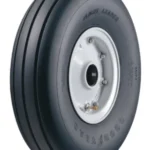
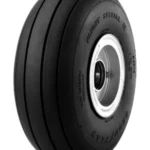
- Goodyear Aircraft Rib 461B-3944-TL: 840×290, 20PR, bias. Listed under military tires with no aircraft application recorded. The size matches the Tu-214 nose position but the ply rating is double the 10PR the type calls for, so this is not a substitute on dimension alone. Out of stock, lead time on request
Operators of Rolls-Royce powered family members need the H40x14.5-19 main gear fitment instead, which Goodyear and Michelin both produce and which DMI Aviation stocks. Those part numbers are listed on the Tupolev Tu-204 page. They do not apply to the Tu-214.
Frequently Asked Questions
Is the Tupolev Tu-214 still in production?
Yes, at the Kazan Aviation Plant, though at a rate far below target. Three aircraft have been delivered in three years against a cumulative goal of twenty. Four are scheduled for 2026, eight for 2027 and twelve for 2028, and the plant is installing flow line assembly with the stated aim of reaching twenty per year.
What are the Tupolev Tu-214 specifications?
Two PS-90A turbofans of 157 kN each, 110,750kg MTOW, 210 passengers in a single-class layout and 175 in two classes, 6,500km range with passengers, 850 km/h cruise and a 12,100m ceiling. Length is 46.2m and wingspan 41.8m. The specification table above gives weights and field performance in full.
What is the range of the Tupolev Tu-214?
Approximately 6,500km (3,510nm) carrying passengers and baggage, falling to around 4,100km with maximum commercial payload aboard. The extra fuel capacity over the Tu-204-100 is the whole point of the variant, and special mission airframes with cabin fuel reach considerably further.
What is the Tupolev Tu-214 price?
Reported at close to 9 billion roubles by mid 2026, up sharply from the 3.3 billion roubles agreed under the earlier Aeroflot arrangement. There is no open Western market and no meaningful secondhand market outside Russia. Fewer than 90 airframes have been built across the whole Tu-204 and Tu-214 family.
What does the Tupolev Tu-214 cost to operate per hour?
No reliable independent figure exists. The three-crew requirement adds a flight engineer salary to every sector, which is the cost item Russian carriers raise most often, and PS-90A overhaul intervals have historically run shorter than Western engines of the same generation. Spares availability under sanctions adds further cost that varies by operator.
Where can I find a Tupolev Tu-214 for sale?
Listings are effectively confined to Russian brokers and state disposals. International platforms such as Controller and AvBuyer carry the type only exceptionally, and sanctions make any transaction involving a Russian-built airframe legally complex for Western buyers.
What interior options does the Tupolev Tu-214 offer?
Commercial layouts run from 175 seats in two classes to 210 in single-class high density, in a fuselage cross-section comparable to a Boeing 757. Cargo hold volume is 37.5 cubic meters. Government aircraft carry bespoke VIP interiors, and the SR, PU, SUS and ON variants carry mission equipment in place of a passenger cabin.
What is the Tupolev Tu-214 landing distance?
Required runway length for landing is approximately 2,250m, against 2,280m for takeoff. Both figures are manufacturer data at typical weight in standard conditions. Actual landing distance is governed by weight, configuration, runway surface and braking action.
What tire size does the Tupolev Tu-214 use?
Main gear is 1070×390 R480, a Russian metric radial, with eight tires across two four-wheel bogies. Nose is 840×290-361 at 10 ply, two tires. Every Tu-214 is PS-90A powered, so unlike the wider Tu-204 family there is no second main gear size to check. Verify against the AMM for your serial number before ordering.
Which tire brands are approved for the Tupolev Tu-214?
Russian domestic manufacturers. Neither Goodyear nor Michelin lists a current production part number against 1070×390 R480 or 840×290-361, and no chined Western alternative exists for the nose position. The Michelin application chart records the sizes against the type but not a fitment.
How much do Tupolev Tu-214 tires cost?
Russian metric sizes are not priced on Western markets, so a dollar figure is not meaningful. For comparison, main gear tires for Western narrow-bodies of similar weight run to several thousand dollars each new, with retreads at a substantial discount.
What is the tire pressure for the Tupolev Tu-214?
Inflation pressures for this type are AMM data and are not published openly. They vary by gross weight, wheel position and variant, and the special mission aircraft do not necessarily match the passenger figures. Work from the aircraft maintenance manual for your airframe.
How long do Tupolev Tu-214 tires last?
Expect 200 to 300 landings before removal on the main gear, with runway surface, braking technique and taxi distances driving most of the variation. Retread cycles extend casing life well past that. Nose tires generally run longer than mains given the load split across eight main wheels.
How often should Tupolev Tu-214 tires be changed?
Replacement is driven by tread wear to the base of a groove, cuts, cord exposure, flat spots and cycle or calendar limits rather than a fixed interval. An overspeed or overload event condemns the tire regardless of apparent condition. A licensed engineer working from the maintenance manual makes the final call.