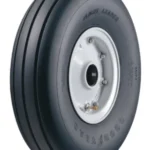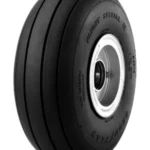

Picture Andrea, newly in charge of tire purchasing for a small charter operator. She searches a part number on our site and finds two listings for it: one marked NEW, one marked RP. Both carry the same part number, but they are not the same listing. She has bought car tires all her life, and her first instinct is a worried one. Is the cheaper one a second-rate tire? Is it safe?
It is one of the questions we hear most from buyers who are new to aircraft tires. The short answer: airlines around the world land on retreaded tires every day. A retread is not a second-rate tire. It is a tire whose casing has been inspected and given a new tread. Here is how we help buyers like Andrea decide.
A casing built to outlive its tread
An aircraft tire casing is built to outlast its tread several times over. When the tread wears out, the casing is inspected and, if it passes, a new tread is applied. The tire is then tested and released with a certificate. The retreads we sell are retreaded by the original manufacturer, with the same engineering and quality system that built the tire. That is very different from the car tire Andrea has in mind.
When a new tire is the right call
- Your aircraft documentation or your customer requires new tires.
- You want casings of your own to retread later.
- The part number is not offered as a retread.
For an operator building up its own tire pool, a new tire is also the start of that casing’s life, and every retread that follows begins with it.
When a retread makes sense
- Lower cost per landing. A retread costs less than a new tire of the same part number.
- The casing has already proven itself in service and has been inspected again.
- For operators with steady tire use, an exchange program keeps tires available while removed casings are retreaded.
How many lives one casing gets
How many times a tire can be retreaded depends on the tire, the manufacturer’s limits and the condition of the casing at each inspection. The retread level, often written as R followed by a number such as R1 or R2, is marked on the tire and shown on the certificate. It tells you how many times that casing has been retreaded. If your operation limits the retread level it accepts, tell us and we will quote within that limit.
Reading the two listings
On our site, NEW means a new tire and RP means retreaded. Each has its own listing and its own price, so check the condition on the product page before you order. The part number is the same because the tire design is the same. The condition is what you are choosing.
Andrea’s choice
Andrea checks her operation’s rules first. Her documentation allows retreads, her maintenance manager has no retread level limit for that position, and the tire is offered both ways. Now the choice is hers to make on cost and on whether she wants to own the casing. For another operator, with a customer contract that calls for new tires, the same search would end at the NEW listing. Either way, she makes the choice by part number and by the rules of her operation, not by instinct.
Always confirm the part number against your aircraft’s approved documentation. A different ply rating or speed rating is a different tire.
Know your part number? Type it in the search bar at the top of this page, or request a quote. DMI Aviation Sales is an authorized Michelin, Goodyear and Dunlop distributor in Medley, Florida.