
Imagine a receiving inspector at an airline maintenance base, call her Grace. A pallet of main gear tires has arrived for the 767 fleet, and one of them is a retread. Grace does not wave it through, and she does not reject it either. She turns it until the light falls across the sidewall and starts reading, because a retread carries its own short history right there in the rubber.
A casing with a second life
An aircraft tire is mostly casing: the plies, beads and body that carry the load. The tread is the part that wears away on the runway. When the tread is gone but the casing is still sound, the casing can be given a new tread and returned to service. That is a retread.
It is not a shortcut. In the United States, the FAA’s Advisory Circular AC 145-4A sets out the accepted methods for developing, qualifying and approving retreads of bias and radial aircraft tires. The current version of the circular is Change 2, dated November 29, 2018. Industry practice is written up in SAE’s ARP4834, the retreading practice for bias and radial tires that the circular relies on.
How a worn tire becomes a retread
The work follows a fixed path:
- Inspection: the casing is examined for damage, wear and structural condition. A casing that fails is not retreaded at all.
- Buffing: what is left of the old tread is removed and the surface is prepared for new rubber.
- Building: new tread rubber is applied to the prepared casing.
- Curing: the tire is cured in a mold, which bonds the new tread to the casing.
- Final inspection: the finished tire is checked again before it is released.
When the work is done in the tire manufacturer’s own retread program, the casing is judged against that manufacturer’s limits, by the people who know its construction best. That is one reason operators often ask for manufacturer retreads.
What Grace reads on the sidewall
AC 145-4A lists the minimum marking a retread must carry. Grace looks for four things: the retreader’s name or trademark, the plant code, the month and year the retread was done, and the letter R followed by a number. R1 means the casing has been retreaded once, R2 twice, and so on.
That R number matters. Each casing can only be retreaded a limited number of times, and the circular describes how a population of retreaded tires is checked before it is approved for further service lives. A tire marked at a higher R level than its limit allows does not belong on the airplane.
The tire in front of Grace is marked with the retreader’s name, a plant code, a recent date and R1. The paperwork matches. It goes on the shelf.
NEW or retread: the choice operators make
Retreading reuses a sound casing, which cuts the number of casings thrown away and spreads the cost of each tire over more landings. Many operators run NEW tires and retreads side by side. The deciding question is always the same: is this tire, NEW or retreaded, approved for this aircraft and this position?
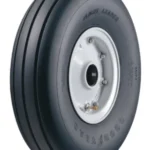
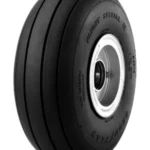
Our catalog shows the pairing clearly. For the 767-200 and 767-300 main gear we list the Goodyear 468K29-2, H46x18.0-20, 32 ply, 235 mph, as a NEW tire, and the same part number as a retread. For the A320 main gear we list the Michelin M01103-02, 46×17.0R20, 30 ply, 225 mph, as a NEW tire, and the same part number as a retread. DMI is an authorized distributor for Michelin, Goodyear and Dunlop, and the rest of the retreads we list are on our retreaded aircraft tires page.
Back at receiving
Grace signs off the pallet. The retread passed for the same reason the NEW tires did: the markings, the paperwork and the part number all agreed with what the aircraft is approved to carry.
Always confirm the part number against your aircraft’s approved documentation. A different ply rating or speed rating is a different tire.
Know your part number? Type it in the search bar at the top of this page, or request a quote.